Rebuilding a family gift shop with Claude Code
My dad's laser-engraving business had great reviews on Etsy but almost no sales on its own website. I audited the store, proposed fixes, and shipped them with Claude Code in about a week.
- Role
- Audit, design and build (freelance)
- Team
- Me, with the owner, Frank, approving
- Timeline
- October 2026, about a week
- Tools
- Claude Code, Claude artifacts, Shopify, Etsy and eBay APIs
Outcome49 audit items, 191 products rewritten and tagged, a new menu, filters and collections, Etsy reviews on the website, and a consistent, accessible theme. Bugs and quick wins went live on day one.
The problem
Frank Bean Market makes laser-cut and laser-engraved gifts in a UK workshop and sells on Shopify, Etsy and eBay. On Etsy it has more than 800 five-star ratings. Its own website, where Frank keeps more of each sale, barely sold anything, even after he hired a freelance marketer. In the 90 days before the redesign it had 522 visits and 6 orders, a 0.95% conversion rate.
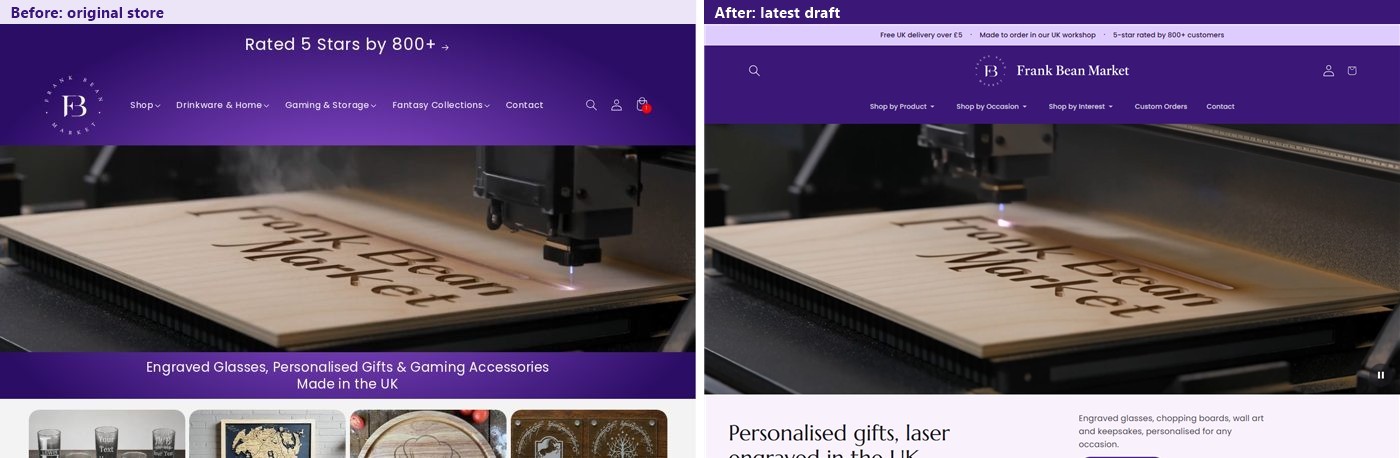
When I looked at the site, I saw why visitors might leave: bugs, inconsistent UI, confusing navigation and none of the social proof he'd earned on Etsy. I offered to audit it and fix what I found.
How I worked
- Audit. With Claude, I reviewed the whole store and logged 49 issues: bugs, quick wins and design decisions, each with a before and after picture.
- Propose in artifacts. I presented every proposal to Frank as an interactive Claude artifact. He could approve, reject or edit each item directly, and his changes were saved for me to act on.
- Agree the rules. Frank let me ship bugs and quick wins straight away, but kept the final say on product decisions like titles, prices and descriptions.
- Build with Claude Code. I set up developer access to Shopify, Etsy and eBay so Claude Code could make changes safely: bulk edits ran as scripts with a backup and a dry run first, and design changes went into a draft theme before going live.
The whole project ran on Claude: a hub artifact tracked every page, decision and approval, so Frank always knew what was waiting on him.
Key changes
Show the trust he'd already earned
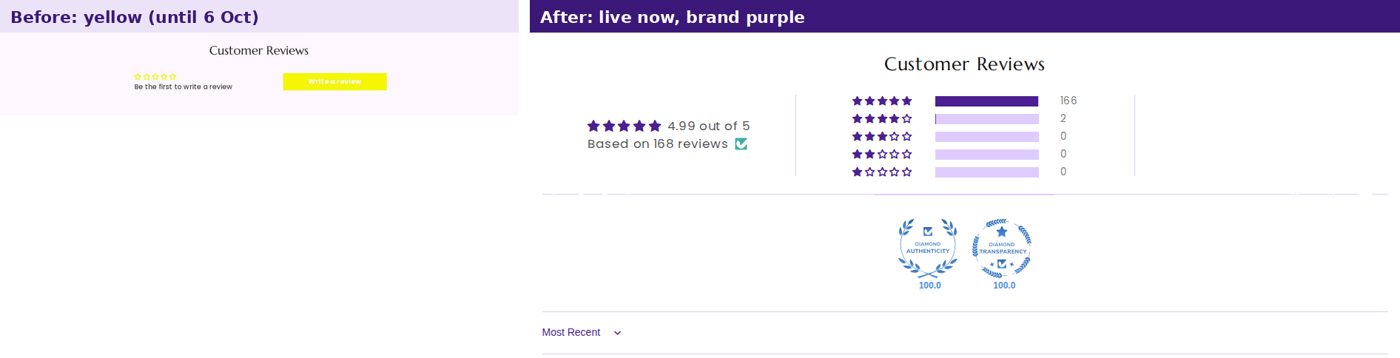
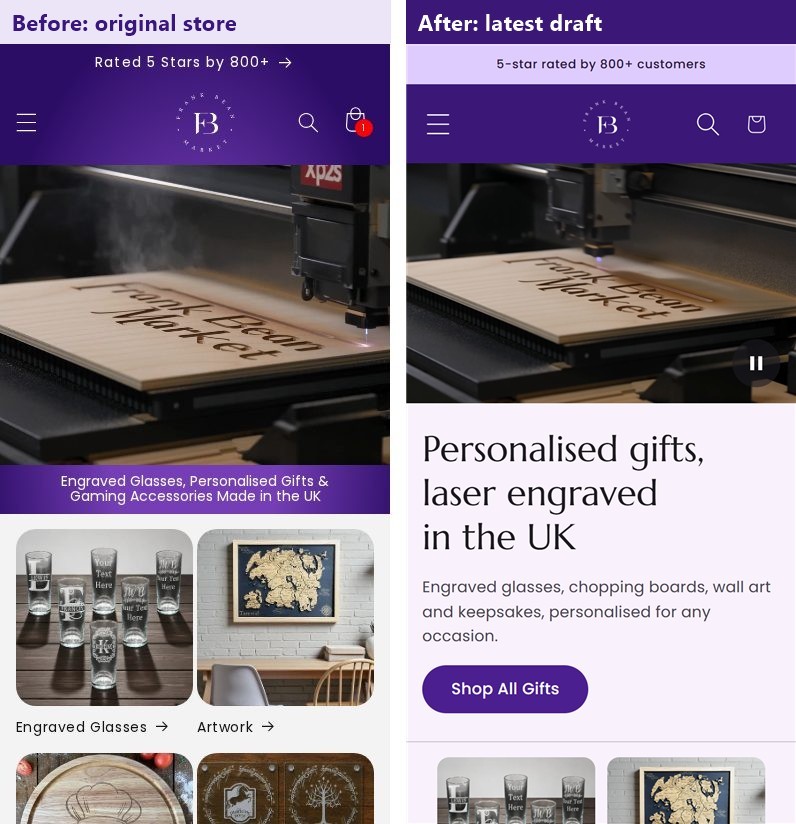
The website's review box said "Be the first to write a review", in bright yellow, while Etsy held 168 reviews averaging 4.99 stars. I brought the Etsy reviews onto the website and restyled them in the brand's colours.
One consistent, accessible theme
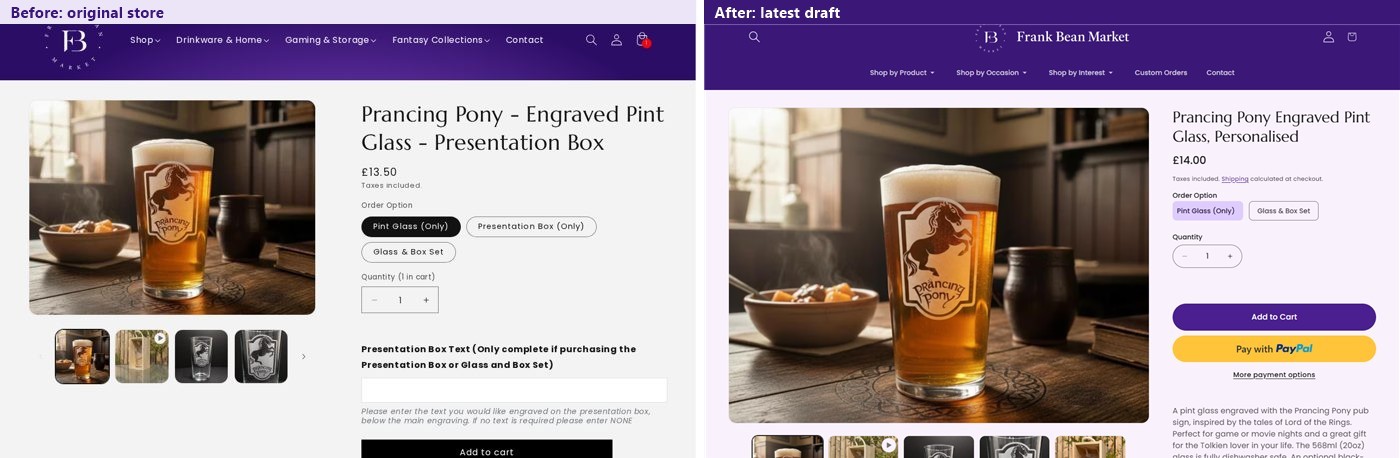
Buttons, colours, fonts and spacing varied from page to page. I moved the store onto one set of styles, tidied the header and logo, and ran accessibility checks on contrast, labels and tap targets. I also fixed a menu that closed the moment you tapped it on a phone.
Shop the way people buy gifts
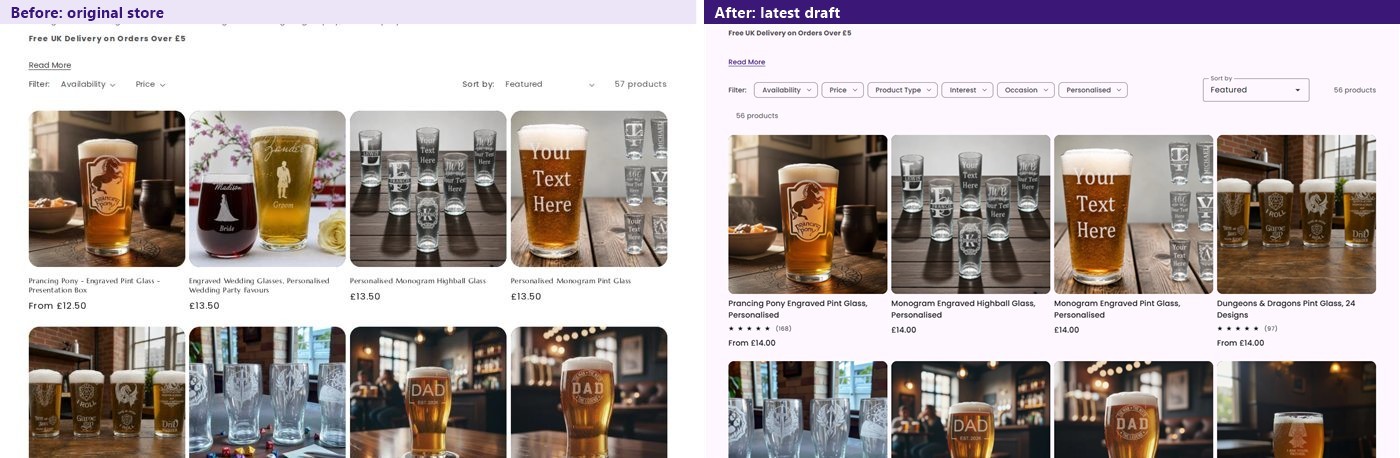
People shop for an occasion or a person's interests, not a product type. The new menu offers Shop by Product, Shop by Occasion and Shop by Interest, backed by 11 occasion collections and four filters. I rewrote and tagged all 191 products, with alt text, so the filters work.
Fix the details that cost sales
- Branded checkout with the full logo instead of a faint mark
- A clear "how personalisation works" section, and a longer engraving text box
- Duplicate prices and empty labels removed
- Inconsistent pricing across Shopify, Etsy and eBay flagged, with a pricing plan for Frank to decide on
- Shorter, clearer product titles and descriptions across every channel
What Frank said
“Rachel spotted problems with my store I’d never have found, and fixed them in a week.”
Frank, owner, Frank Bean Market
Beyond the website
I also aligned the Etsy and eBay shops with the website: consistent titles, details and categories. I wrote a growth plan covering every sales channel, and a checklist for Frank's conversations with his marketer, so he could judge the work he was paying for.
Where it stands
Bugs and quick wins went live on the first day. Frank approved the full redesign and published it on 13 October 2026.
That's the baseline. I'll compare the same figures in mid-November, once the redesign has been live for a month.
What I learned
Presenting decisions as interactive artifacts changed how a non-designer could take part. Frank didn't need to read a report or learn a tool. He ticked, edited and approved, and Claude Code built exactly what he agreed to.